Convert JPG to PDF on Windows
Combine JPG images into one PDF on Windows with Microsoft Print to PDF, set page order, then shrink the file if Outlook or a portal rejects it.
Insurance forms, signed scans, expense receipts, and photo proofs are easier as one PDF than twelve separate JPEGs. Reviewers scroll one document, portals accept a single upload, and print shops expect a multi-page file. Build the PDF once, verify page order in print preview, then compress only if the attachment still fails a limit.
Combine images with Print to PDF
Microsoft Print to PDF is the built-in way to convert JPG to PDF on Windows:
- Select the JPEG files in File Explorer.
- Right-click and choose Print.
- Select Microsoft Print to PDF as the printer.
- Confirm layout (one image per page unless you need multi-image sheets).
- Choose Print and save the PDF.
Use the preview strip to confirm order before you save. Photos can crop or resize individual JPEGs before you print. Smaller sources produce smaller PDF pages.
Merging does not shrink files. A dozen phone photos can still produce a 25 MB PDF that Outlook rejects. Plan a size check after export.
If you need pages back as images later, see PDF to images on Windows .
Order, size, and orientation
| Goal | Windows step |
|---|---|
| Uniform page width | Resize in Photos before print |
| Correct orientation | Rotate in Photos or Paint first |
| Fit the sheet | Use Fit picture to frame in the print dialog |
For ID scans and receipts, a consistent width around 1500 px keeps pages similar inside the PDF. Resize before print rather than relying on scaling later.
When sources are already compressed JPEG scans, merge once. Avoid repeated lossy re-saves of each photo before the PDF step.
| Scenario | Why one PDF helps |
|---|---|
| Email submission | One attachment under the size limit |
| Client portal | Single file field, not a zip of photos |
| Legal or HR packet | Signatures stay on the correct page |
Shrink the PDF after merge
Open the PDF in Edge and check readability at 100% zoom. If File Explorer shows the file over your cap:
- Prefer a PowerPoint re-export when the content came from slides.
- Otherwise compress with a dedicated tool rather than printing to PDF again (each print pass can soften text).
Full options: how to compress PDF on Windows . Resize sources first with how to compress images on Windows . Keep the uncompressed merge until you confirm the reduced copy.
When Print to PDF is enough
Print to PDF can work when you merge a few scans once and the file clears the limit.
GetCompress does not merge images into a PDF. Use Print to PDF for that step. After the merge, GetCompress fits when the file is still too large, you repeat the same optimization on many packets, or the documents should stay local.
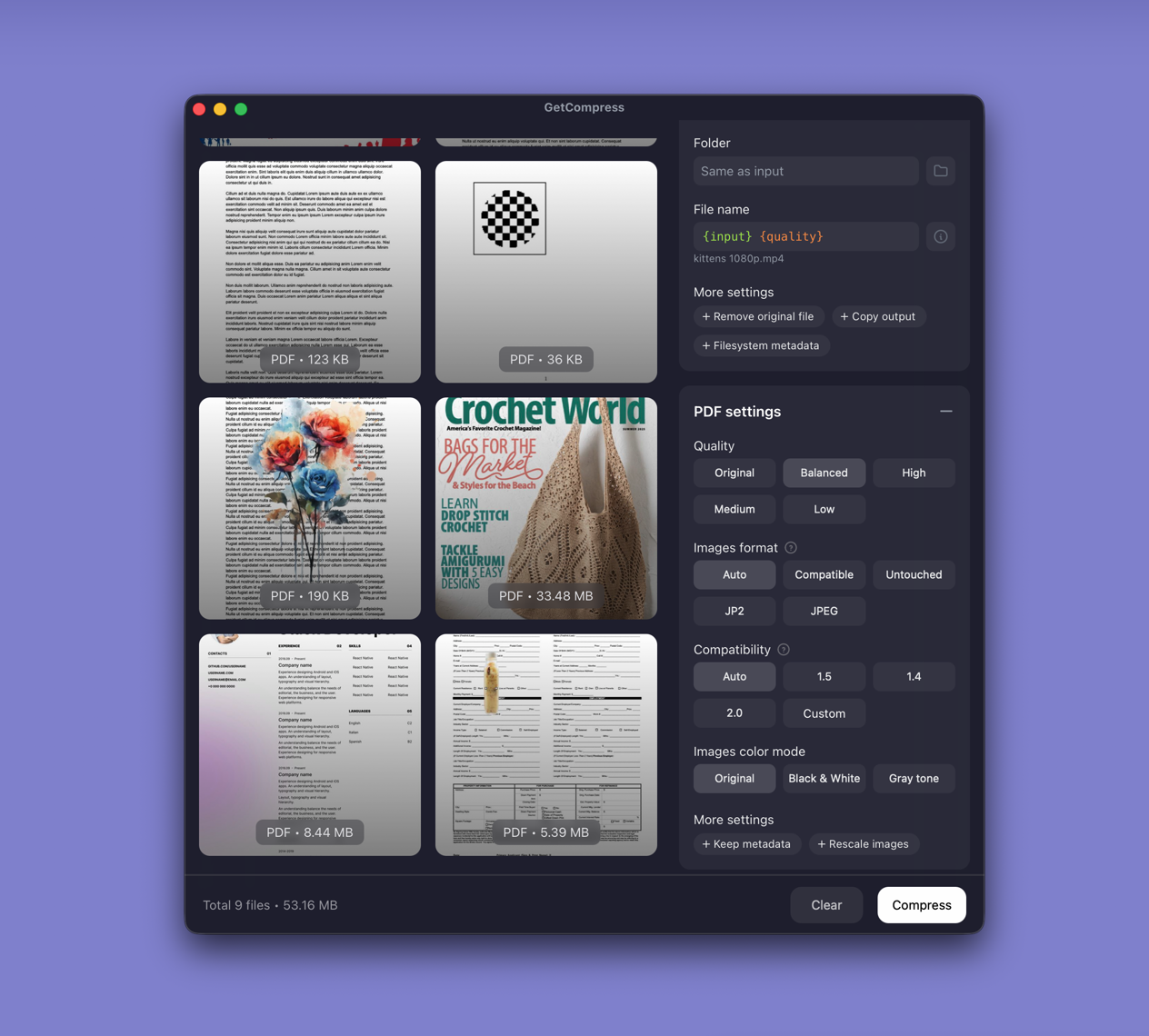
Drop the merged PDF in, pick a PDF compression preset, preview signature pages, and export a copy. There is no exact megabyte target file size for PDF; that control is video-only. Check the result against your limit in File Explorer. Label files with date and recipient so you do not resend an older master by mistake.
- How to Compress PDF on WindowsCompress PDF on Windows with GetCompress, PowerPoint re-export, or Ghostscript. Shrink decks and scans for Outlook and portals.
- Export PDF to Images on WindowsTurn PDF pages into PNG or JPEG on Windows with Edge, pdftoppm, or a resize pass in GetCompress. Batch slide decks without online splitters.
- How to Compress Images on WindowsCompress images on Windows with GetCompress, Photos, or FFmpeg. Resize JPG and PNG, convert WebP, and keep sharp UI for email or web.
- Convert JPG to PDF on MacCombine JPG images into one PDF on Mac with Preview, set page order, then shrink the file if email or a portal rejects it.